Angela Davis, Lee Daniels, Genius: Aretha, Queen Latifah, Nika King, and More Featured During Second Week of the Pan African Film Festival

Special screenings, conversations, panels, and events

paff logo

LOS ANGELES - America’s largest Black film festival, the​ Pan African Film Festival​,  continues this week.  Below are highlights of this week’s programming.

Due to the COVID-19 pandemic, the 29th Pan African Film Festival will run through March 14 on-line and on-demand only. The virtual component allows this year’s Festival to reach a global audience. More information and tickets can be found at www.paff.org.

phtoto PAFF press release 3.9.21

SPECIAL SCREENINGS

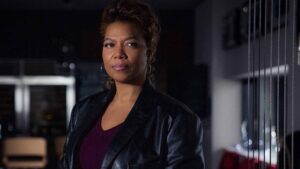
CBS has partnered with PAFF to premiere episodes from The Equalizer (Mar. 9, 6 p.m. PT), The Neighborhood (Mar. 12, 6 p.m. PT), and Bob❤️Abishola (Mar. 12, 6 p.m. PT) along with exclusive Q&As with the cast of each show.

National Geographic’s Genius: Aretha starring Cynthia Erivo (HarrietThe Color Purple) will premiere during the PAFF on Mar. 11 at 6 p.m. PT.

Closing Night (Mar. 14, 6p.m. PT) will spotlight Lázaro Ramos’ directorial debut Executive Order.  The film is set in a dystopian near future in Brazil where an authoritarian government orders all citizens of African descent to move to Africa – creating chaos, protests, and an underground resistance movement that inspires the nation. Director Lázaro Ramos’ and members of the cast will participate in a Q&A following the screening. Mar. 14, 6 p.m. PT.

Trade tells the story of two men, one a streetwise hustler, the other a strait-laced lawyer, who meet and form a relationship that brings to light who they really are. As their relationship deepens and their lives intertwine, the complexity and dangers of  living their truths reveal themselves in ultimately tragic ways. Hosted by Better Brothers Los Angeles and In the Meantime Men’s Group, following the screening, there will be a discussion about the lives of transgender people and how to support and advocate for the LGBTQ+ community. Mar. 12, 6 p.m. PT.

PAFF press release

CLIPS AND CONVERSATIONS

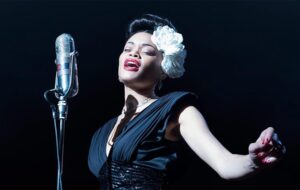
A special conversation with director Lee Daniels and the cast of The United States Vs. Billie HolidayMar.10, 6 p.m. PT.

phtoto PAFF press release 3.9.21 2

PANELS

Unless otherwise stated, panels are on-demand at paff.org.

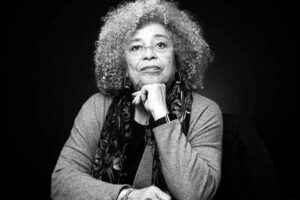
Where Do We Go From Here: Chaos or Community? - A powerful group of change-makers across multiple generations come together to discuss today’s Black Lives Matter Movement in the context of the struggle for Black Liberation.  Panelists include activist and professor Angela Y. Davis, historian and scholar Dr. Gerald Horne, Black Lives Matter activist Dr. Melina Abdullah, and political strategist and journalist Jasmyne A. Cannick. The conversation is moderated by Pan African Film Festival co-founder Ayuko Babu.

Facebook Presents ‘We the Culture’ - PAFF and Facebook will host a roundtable discussion with filmmakers and digital creators from Facebook's We The Culture Program--a creative community fueled and curated by Black creators, dedicated to celebrating and championing Black culture and broader conversations important to the Black community. Panelists include: Dr. Mehret MandefroLacey Schwartz DelgadoWesley Armstrong, and James BlandMar. 12, 4 p.m. PT on Facebook.com/paffnow.

Showtime Presents ‘Inside THE CHI Writers' Room’ - Get an inside look into The Chi's Writers Room. Features panelists Justin Hillian, Showrunner, Writer, and Executive Producer, Jewel Coronel, Writer and Co-Executive Producer, Resheida Brady, Writer and Supervising Producer, and James Rogers III, Writer and Executive Story Editor.

The Intersectionality of Women of Color in Film & TV - Women of Color Unite (WOCU) hosts a discussion on the highs and lows of the intersection of Women of Color in film, the Women of Color run media and entertainment organizations that support them and the infrastructure that tries to erase them. Panelists include: Cheryl L. BedfordNikki BaileyTatiana LeeFanshen CoxDiana Elizabeth JordanTwinkie Byrd, and Tonya Pinkins.

Other panels include: How to Get Your Kids Into Show BizFix it in PostCan't Stop, Won't Stop: Black Women Transforming the Industry, and By Any Means Necessary: Making Movies on Micro to No Budget.


phtoto PAFF press release 3.9.21 3

SPECIAL EVENTS

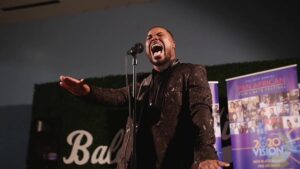
Spoken Word - Hosted by poets Paul Mabon and LaLa Deville, PAFF will once again present its popular poetry slam featuring the best wordsmiths in Los Angeles. Premieres Wed. Mar. 10, 6 p.m. PT and then available on-demand.

LOL! Comedy Jam - PAFF’s annual comedy show featuring comics from around the world.  Hosted by Nika King (Euphoria), this year’s featured comics include Jazmyn W (Tik Tok content creator), Marcus Smith (You Know Maacus), Zainab Johnson (100 Humans), Jonnae Johnson (Tru TV), and David Lucas (Freshest Fat Boy). Premieres Wed. Mar. 10, 6 p.m. PT and then available on-demand.

Children’s Fest - Free age-appropriate screenings for children 4 to 12.  Feature films include  Nigeria’s Lady Buckit and the Motley Mopsters and various Disney animation features. Sponsored by Union Bank. Mar. 13-14, 11 a.m. PT.

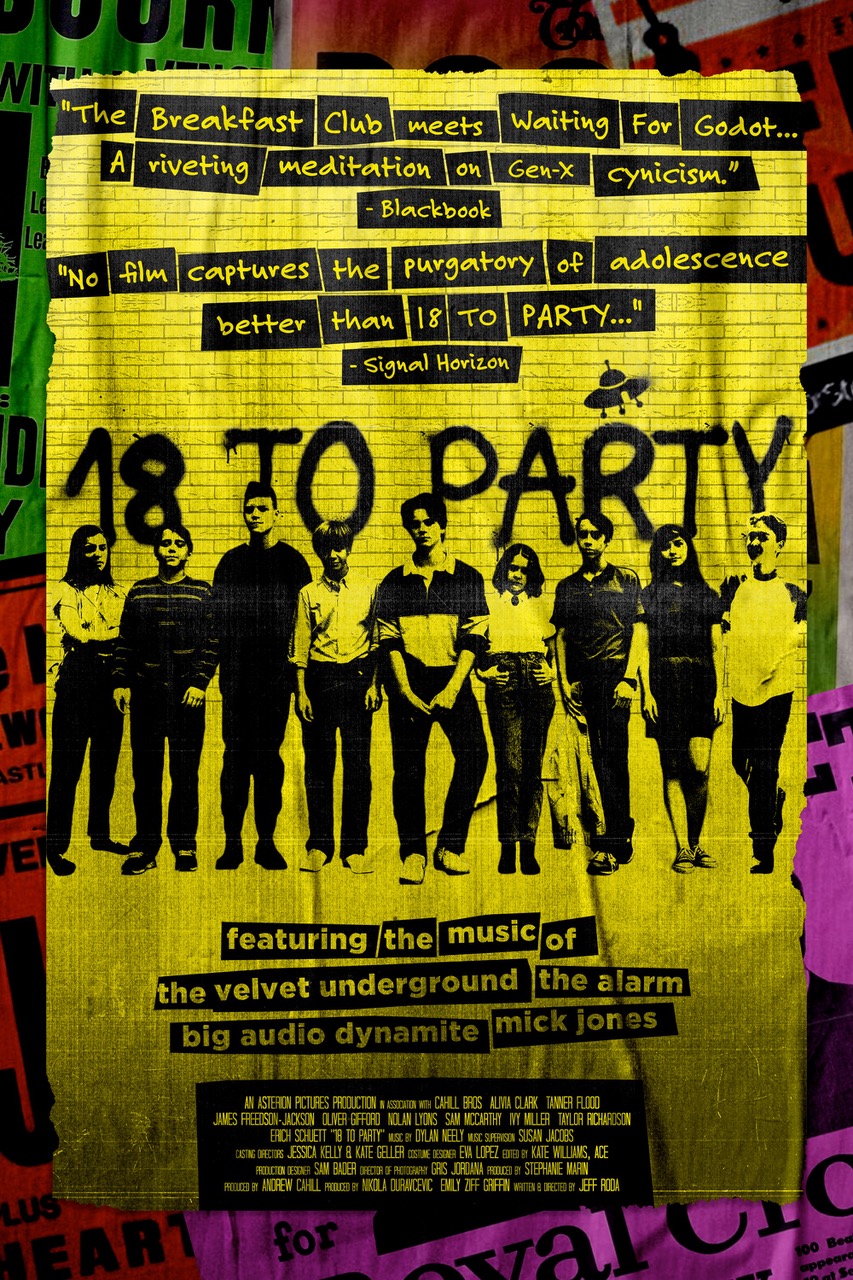
18 TO PARTY: An Interview with Director Jeff Roda

FINAL 18 TO PARTY POSTER

Bottom line: When Waiting to Get in A Line, Is More Important Than Getting in The Line
Director and Writer : Jeff Roda
Starring: Alivia Clark, Tanner Flood, James Freedson-Jackson, Oliver Gifford, Nolan Lyons, Sam McCarthy, Ivy Miller, Taylor Richardson and Erich Schuett

I had the opportunity to talk with director Jeff Roda to discuss his film new film 18 TO PARTY.

It’s 1984 and outside a small-town nightclub, a group of 8th graders gather, grappling with a spate of recent suicides, UFO sightings, their absentee parents, and each other. 18 to Party spans a single evening in the lives of these kids but manages to transport us fully to a time when waiting for something to happen felt just as significant as the thing itself.

YR: You have said you opted to write about your experiences in 18 TO PARTY in the form of a fable, how has writing about your experiences impacted you.

Jeff Roda: Yes. It started out as a play and was worked shopped. It is hard to get a play out of 11 teenagers but the content itself, came from my life. It came geographically from the same place I come from. Some of the characteristic, some of the experiences that the kids are going through, especially a couple of the characters, I went through the exact same thing. Some of the horrible things that happened to some of the kids in that community, were the same thing that happened in my community.

It was a small community, and I was little but those were the things that were happening with the kids who were six years older. It was all based on reality baked into a fable. Basically, it is away to present the film in a meditative way rather than trying to create a big narrative.

YR: Has there been any improvements made in the outcomes for the young people in your hometown?

Jeff Roda: It is interesting. There was something very singular about this area that I lived. It is the outer suburbs about 80 miles north of New York City but if you are 80 miles away from a big city and you are a kid, that is far. You are in the shadow of it, but you are still not going there.

My school was very small and very white, and those things remain today. In terms of the community itself, there is a lot farmland, horse farms and orchids and because of that it has turned into a working/middle class community. A lot of people moved north from the city with a lot of money and built huge stables, mansions and stuff like that. So those elements are there but the sort of rank and file are still similar.

YR:  You did excellent writing for the film. There was some dialogue between Shel and Amy that really stuck with me. Shel had asked Amy, why people would want to think that way and Amy responded, so they will not have to think about anything else.

Jeff Roda: You see from the film that it is almost shocking in a lot of ways how much things have not changed as much as things have changed.  I think for me, it really came around to the reality of the suicides. The trouble these kids were having, the isolation these kids were having and the aloneness. The latch key kids as we were called. And this is an inditement, somewhat, of the parents and adult figures who were not there for them.

It is weird, more of an around about way to get to the answer but a truer way. I did a lot of research about that time about the suicide and mishaps that were going on at that time. There was a nationwide epidemic of suicide in this specific year with a lot of kids, all these high performing kids from all over the country.

And when parents or school administrators were interviewed and were asked about what they think is happening, they all said peer pressure, drugs, and job prospects. Like anyone gives a sh** when you are in the 10th grade about job prospects. Of all these things, no one said maybe we are not looking out for them. Maybe some of this is on us.

No one ever said that and I boiled it down in those two lines where Amy said they do not want to look at it, they don’t want to look at anything more than their excuses for not being there for them. It is not a generation ahead of us that is quick to blame themselves for things.

That was basically the meaning of that line she said they will not have to think about anything else. Meaning they do not have to be reflective. They will not have to look any deeper into their responsibilities for these kids and what happens to them.

YR: What was it like preparing and working with the ensemble of young talented actors?

Jeff Roda:  It was one of the best experiences of my life, in a way, casting of these kids. We have great casting directors Kate and Jessica. It was my first film directing and the one thing I felt pretty good about going in was I would be able to cast the film with 10 kids. Some with no experience ever being in front of camera, one was on Broadway, one had been in a television series, and one had experience with independent films. It was a wide range of experiences.

Working with them and seeing these 13, 14, 15-year old kids really commit and inhabit the same space was great. Because it was a very short shoot, 15 days and there were kids younger than 16 there’s labor law and screen actor’s guild restrictions to follow.

They had to do a lot in a short time. Watching them come together and inhabit the same cosmic place it was amazing.  It was amazing, almost like being a parent in away, every kid had their moment that things were a little stressful, got a bit overwhelmed, frustrated or something kind of like that. Each one had a day of that, or a moment of that. It was great to support these kids.

These were extraordinary kids. Just warm and committed, competitive with each other in a healthy way.  Everyone had a lot of work to do and the movie was only going to work as well as how well any of the actors were prepared. And they all really did it. I think that is part of the competitive spirit, creatively, were privately they are like I do not want to be the one, I do not want to be the one with any mistakes.  It was great. It was fun having an idea, having an instinct about kids and then actually delivering on that. It made me feel really proud. It was rewarding.

YR: How did you come about the setting for 18 To Party, the back of the building, the limited space and telling such great stories?

Jeff Roda: When you are making a film this size, until you are shooting the film is not definitely happening. We did not have that location until 2 days prior to the first day of shooting. And as originally written in the script, it was more one dimensional, more theatrical, the kids were hanging next to a mall.   Again, it was originally written for the stage. As you saw from the back of this club, we found this place with 2 days left. We had to dress it. There are stairs, there is a loading dock area, a cement barrier that kids sit on. Just a lot more texture and space to work with.

We had a wonderful cinematographer named Gris Jordana. She did a lot with what was there. There was more than we thought was going to be there. She did so much with it. We really lucked into it. It was an abandoned place in Staten Island. There was a realtor sign next to it and it was called the number and we were in there.

It was not a club. Our entire production was inside that building and we were shooting outside. It is one of those things that came together. We are very, very lucky.

YR:  What else do you have in the works or that you are working on with any of the actors in 18 to Party.

Jeff Roda: Several of them, I know Sam that played Peter, he is in a couple of series, one on Netflix with Christina Applegate and Linda Cartalini. He plays Christina Applegate’s’ son. Taylor, who plays Missy, she has been doing this for years.  She was the last Annie on Broadway and I think she is in a series on Netflix. Tanner is working on the Kimmie Schmidt Show. And some are just going to school. They are really self-possessed. They are wonderful. They do not need to be acting stars. They can do anything that they want, and this is something they are doing now and exploring.

As for me, I am working on one specific movie, a script and hopefully it will be done within weeks. I am looking forward to reverse engineering 18 To Party back into a play. Which I think would be a great experience. Because I think there are a lot of roles for younger actors in acting school. I think it would a good piece for a group of kids to do together.

YR: How have you been impacted, as a filmmaker, by COVID-19?

Jeff Roda: It has not at all, frankly, because it is really up to me to write. Unfortunately, it has not at all because I have nothing to shoot right now. But it has affected the way a movie is released. The way a movie our size is released. It has completely changed everything, and I think people are really trying in the moment to pivot or understand what is happening with movies. Basically, movies cannot be released in the theaters right now. In any circumstance, to get an independent film out there to get tractions is very difficult. In some weird way, it is also very exciting because there are opportunities to get word of mouth. There are opportunities to roll it out slowly. We opened at the Alamo On Demand Virtual Cinema and Laemmle Virtual Cinema and then a month later a wider release on iTunes and Amazon Prime. So, in between that, we can get reviews, we can explore. There is a longer period now for people to discover the film. With this movie, if it had come out in May like it was supposed to, it would have been in a few theaters in New York and a few Los Angeles. You do not have a lot of money to promote it, so you are not going to get a lot of people regardless of the reviews being rave reviews.  You are still going to have a per screen average of about $500 and then your movie is going to go away after a week or two.  In some weird way, COVID has given these films more of a chance, for now. That is how it has affected filmmaking.

Distributor: Giant Pictures
Run time: 1 hour 20 minutes
Starring: Enzo Cellucci, Alivia Clark, Ashling Doyle, Tanner Flood, James Freedson-Jackson, Oliver Gifford, Nolan Lyons, Sam McCarthy, Ivy Miller, Taylor Richardson, Erich Schuett, Kevin Daniel Carey
Written & Directed by: Jeff Roda
Produced by: Nikola Duravcevic, Emily Ziff Griffin, Andrew Cahill, Stephanie Marin Production Company: Asterion Pictures in association with Cahill Bros
Editor: Katherine Williams, ACE
Cinematographer: Gris Jordana
Production Designer: San Bader
Costume Designer: Ava Lopez
Music: Dylan Neely, featuring the music of: The Alarm, Big Audio Dynamite, Mick Jones, The Velvet Underground and many more.

VIEW TRAILER BELOW!

KOKO-DI KOKO DA: An Interview with Director Johannes Nyholm

KokoDiKokoDa US Poster

Runtime: 1 hour 26 minutes
Director: Johannes Nyholm (THE GIANT)

Starring: Peter Belli, Leif Edlund, Ylva Gallon, Katarina Jackobson, Brandy Litmanen
Language: Swedish and Danish with English subtitles
Rating: Not Rated 
Genre: Horror, Fantasy

I had the pleasure of talking to Johannes Nyholm, director of Koko Di Koko Da.

A horror film about Elin and Tobias a happily married couple who regularly vacation with their young daughter. The family is on a dreamy holiday when an innocuous case of food poisoning derails their plans and forever alters the course of their lives.

YR: You have said that the setting for the film was in the wee hours of the morning when dreams are the most untamed and that is how you came up with idea for the film.  Was that the process throughout the filmmaking?

Johannes Nyholm: Yes. This film had its own life. First of all, it was inspired by a dream that came to me. I saw what was happening in the film in front of my eyes while being half awake asleep in the wee hours. I wrote it down and shot it and I realized it had to be something more. It was too crude, harsh, too nightmarish. It was impossible to watch it.  Things happen in my life by chance and the story elements that I added to the film were really strange things that just happened that told me how the story should be told. It did not feel like I came up with it.  It is more like it came to me.

YR: You mentioned you had a background in classical animation.

Johannes Nyholm: Yes, I went to animation school along time ago. I also have a history of working with musician and doing a lot of music video. Music goes well with animation.

YR: You had two scenes of a family of rabbits telling the story of death, was that a way of paying homage to classical animation, including it in your work?

Johannes Nyholm: It wasn’t an idea of paying homage. I just felt it was needed to tell the story from a different perspective. And to show a little comfort and some beauty and poetry to the audience as well.  Other wise without these images and musical interlude the film would be too horrible to endure.

YR: How and what did you do to prepare as a writer, director and producer for the film?

Johannes Nyholm: I started this film as a learning process. When I started to make this film, I had no experience directing. I had almost no experience working with a big film crew. I have made some music video before but did not have any sound on set there were just a couple people with a camera doing some improvised stuff. Now, it is like a complex story with a lot of people involved. For me it was a bit scary. But most of all, I kind of like the idea of losing control, of not really knowing what to do and how to solve things. It is more fun to work that way. I had hoped it adds some kind of primal element to the story. Even I as the director cannot really control it and something else would come out, something that is bigger than my thoughts, better than my thoughts, something more irrational.

YR: What was it like working with your cast members?

Johannes Nyholm: It was fantastic. As I said, it was like a learning process for me working with actors. I never even cast them. There was no competition for the lead characters.

I found two actors I have seen in a short film that a friend of mine had directed. And I really like their energy, their energy together. I knew with this film, did not have so much money. But what I wanted was time. So, I wanted people to invest their time, their energy in the film. I wanted someone that could go the extra mile. I felt that directly with them. I tried some scenes with them, going around in the car, tested out some dialogue and it felt right. I gave them the part without asking someone else or looking somewhere in another direction.

YR: Can you tell us if there are any other projects you are working on or that you are planning on?

Johannes Nyholm: Yes. Right now, I am writing a script for something completely different. It is a lot brighter, a lot lighter story. It is a slap stick comedy. It is inspired by old classic slap stick comedy, like Charlie Chaplin. I want to give a bit brighter side to life.

YR: As a filmmaker, how has COVID-19 impacted you?

Johannes Nyholm: For me personally, no, it does not affect the writing process. It doesn’t affect my actual filmmaking. but it affects the way the film I made is presented.

I think it is tragic that you cannot see movies in a theater but through the computer.  It is sad.  I would have loved to be in the states and be there in the audience and talk to them and discuss the film with them afterwards. That is a lot of what filmmaking is about, trying to communicate and talk about your experiences. You kind of lose a little part of that.

Distributed in North America by: Dark Star Pictures
Runtime: 1 hour 26 minutes
Starring: Leif Edlund, Ylva Gallon, Katarina Jacobson, Peter Belli, Morad Baloo Khatchadorian, Brandy Litmanen
Director/Scriptwriter/Producer: Johannes Nyholm
Director of Photography: Johan Lundborg, Tobias Höiem-Flyckt
Executive Producer: Peter Hyldahl
Co-Producer: Maria Møller Christoffersen
Produced by: Penelope JulieBruun Bjerregaard
Assistant producer: Maria Møller Christoffersen
Co-producer: Peter Hyldahl
Executive producer: Johannes Nyholm
Cinematographers: Tobias Höiem-Flyckt, Johan Lundborg
Editor: Johannes Nyholm
Music: Olof Cornéer, Simon Ohlsson

VIEW TRAILER BELOW!

We Are One: A Global Film Festival Free On YouTube May 29 – June 7, 2020

We Are One A Global Film Festival

The corona virus COVID-19 has turned the film industry upside down and has caused the cancellations of film productions, screenings, premieres and film festivals around the world.

To bring much needed entertainment through film to the world and help with the desperate needs of humanity during this pandemic, global film festivals have come together to establish We Are One: A Global Film Festival that will be screen exclusively on YouTube May 29 – June 7, 2020.

This free 10-day film festival gives viewers an opportunity to support COVOD-19 relief efforts by donating from the film program pages. The funds will go to WHO (World Health Organization, UNICEF, UNHCE, Save the Children, Doctors Without Borders, Leket Israel, Go Foundation, Give2Asia and more organizations.

The Film Festivals participating in the We Are One: A Global Film Festival are Annecy International Animation Film Festival, Berlin International Film Festival, BFI London Film Festival, Cannes Films Festival, Guadalajara International Film Festival, International Film Festival and Awards Macao (IFFAM), International Film Festival Rotterdam, Jerusalem Film Festival, Locarno Film Festival, Marrakech International Film Festival, New York Film Festival, San Sebastian International Film Festival, Sarajevo Film Festival, Sundance Film Festival, Sydney Film Festival, Tokyo International Film Festival, Toronto International Film Festival, Tribeca Film Festival, and Venice Film Festival.

The films screened are web series, television, feature films, 360 VR, short films with panel discussions and other programs.

There are films for everyone to choose from that include action and adventure, Romance, Drama, animation, comedy, documentaries, music, activism and socialism, fantasy and experimental.

The screening schedule lists the time for the first showing for each film. There will be additional showings as well as most films going to VOD.

View the schedule for We Are One: A Global Film Festival film at  http://www.weareoneglobalfestival.com/schedule

We Are One: A Global Film Festival on YouTube at http://www.youtube.com/weareone